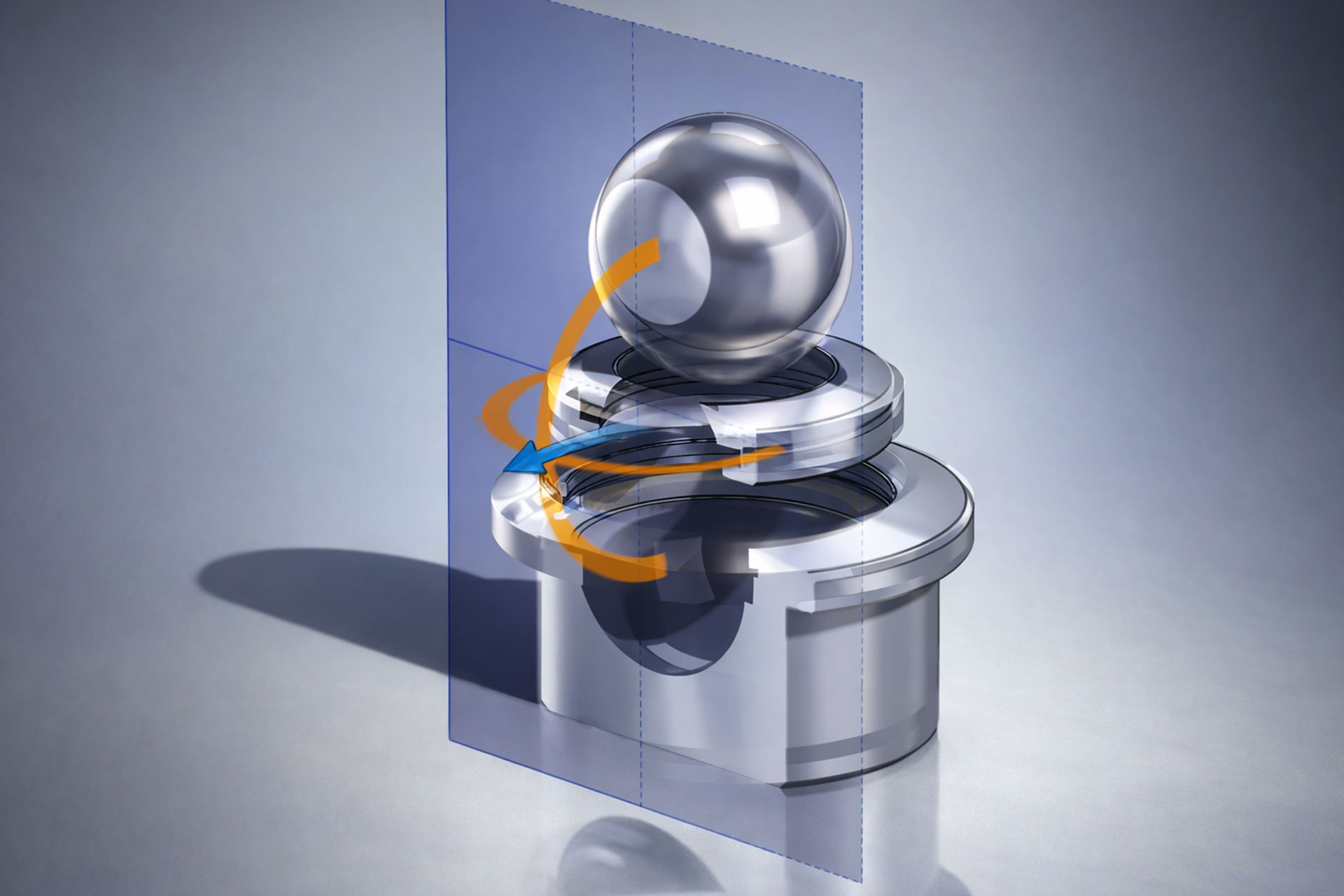
Digital design is the first quality control
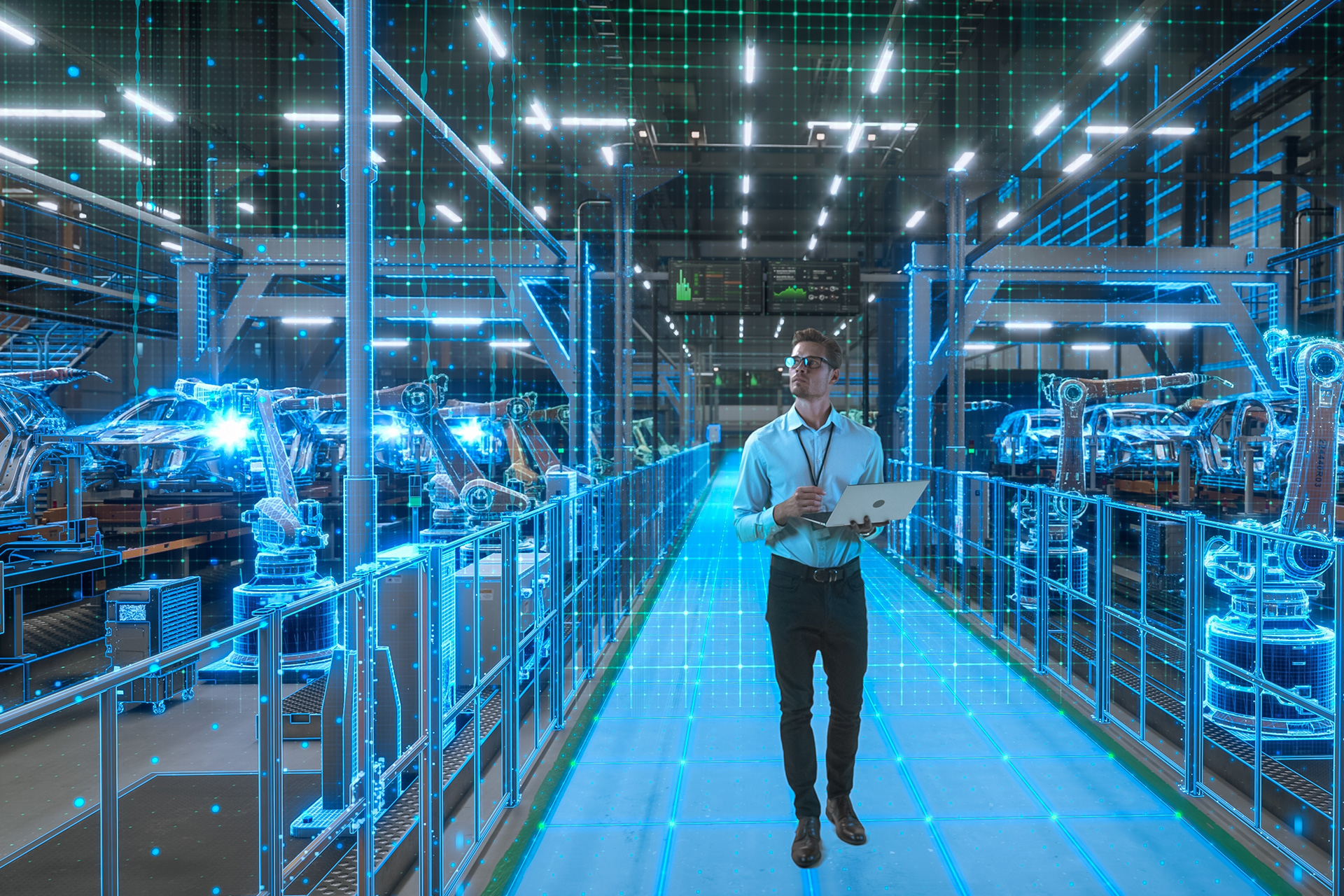
Behind the micrometric precision of an industrial ball there is much more than advanced machining: virtual models and digital simulations make it possible to analyse geometries, materials and process parameters in advance, with an approach, known as simulation-driven design, that enables virtual precision to be transformed into real performance.
Computer-aided design (CAD) and computer-aided manufacturing (CAM) software and digital models enable geometries, materials and finishes to be managed with a level of accuracy that is difficult to achieve with traditional approaches. In fact, they limit variability and uncertainties even at the preliminary stage, thus reducing errors, waste and development time.
Geometry, tolerances and performance: designing for precision
In the case of precision balls, geometric modelling is not limited to the nominal shape. Each parameter (diameter, sphericity, roundness, surface roughness) is defined according to the actual purpose and operating conditions.
CAD software makes it possible to:
- set dimensional tolerances consistent with ISO standards and operating requirements;
- simulate micro-deformations and geometric variations;
- assess the impact of machining operations on functional surfaces.
Digital simulations in industrial production thus make it possible to predict component behaviour, reducing the risk of deviations that, in critical areas, can compromise durability, safety and performance.
Defining detailed tolerances is a critical step: find out why precision tolerances are crucial.
From design to machine: the integration of CAD and CAM
The move from CAD to CAM eliminates discontinuities between design and production. Digital models are converted directly into machine tool instructions, ensuring consistency between drawing and actual part.
Simulations of production cycles make it possible to
- optimise the sequence of processes (grinding, lapping, polishing);
- test tools and process parameters;
- anticipate dimensional and process effects related to materials and heat processing.
As such, digital simulation of industrial production becomes an operational tool to make processes more stable, repeatable and controllable.
From simulation to measurable quality: digital continuity along the production process
The value of digital simulations fully emerges when the design data accompanies the product all the way to its final inspection. Digitalisation creates a direct thread between the virtual model and real verification, and transforms quality control into a continuous and predictive process.
Direct comparison between model and production reality
The data generated by CAD/CAM software becomes the reference for dimensional checks and also for physical checks that take place in the metrology lab. Measurements made with advanced instruments are compared directly with the digital model, making it possible to
- analyse deviations between the design and the actual part;
- identify systemic deviations;
- take targeted action on process parameters.
Quality control stops being an a posteriori verification and becomes an integral part of process management.
Data-driven quality laboratories and metrology
In inspection and testing laboratories, digital simulations support technical decisions. Virtual models help to define project-consistent control plans, interpret test results and document compliance in a structured manner.
The result is a more robust quality system based on objective data, greater repeatability of measurements and complete traceability of production batches. Quality is not only certified, but built throughout the process.
The RGPBALLS approach: digital simulation for the service of precision
At RGPBALLS, CAD/CAM software and digital simulations in industrial production are part of a broader process digitisation strategy. Virtual design, combined with integration with production lines and a direct link to metrological controls, enable reliable and certified precision balls.
Thanks to the combination of manufacturing know-how and digital tools. RGPBALLS is capable of offering high-performance, traceable and customised solutions, thus meeting the needs of industries that are increasingly focused on efficiency and risk control.
Would you like to learn more about how digitisation can improve your production processes?
Let’s talk about it together.
CONTACT US








20092 Cinisello Balsamo (MI) - Italy
P.I. / C.F. / Reg. Impr. 08678490965
N. REA: MI-2042305
Cap. soc. € 1.000.000 int. vers.

Please note that any particular and specific technical requirements must always be requested in advance during the quotation phase.