Recycling and reuse of precision balls: sustainable practices for industrial products
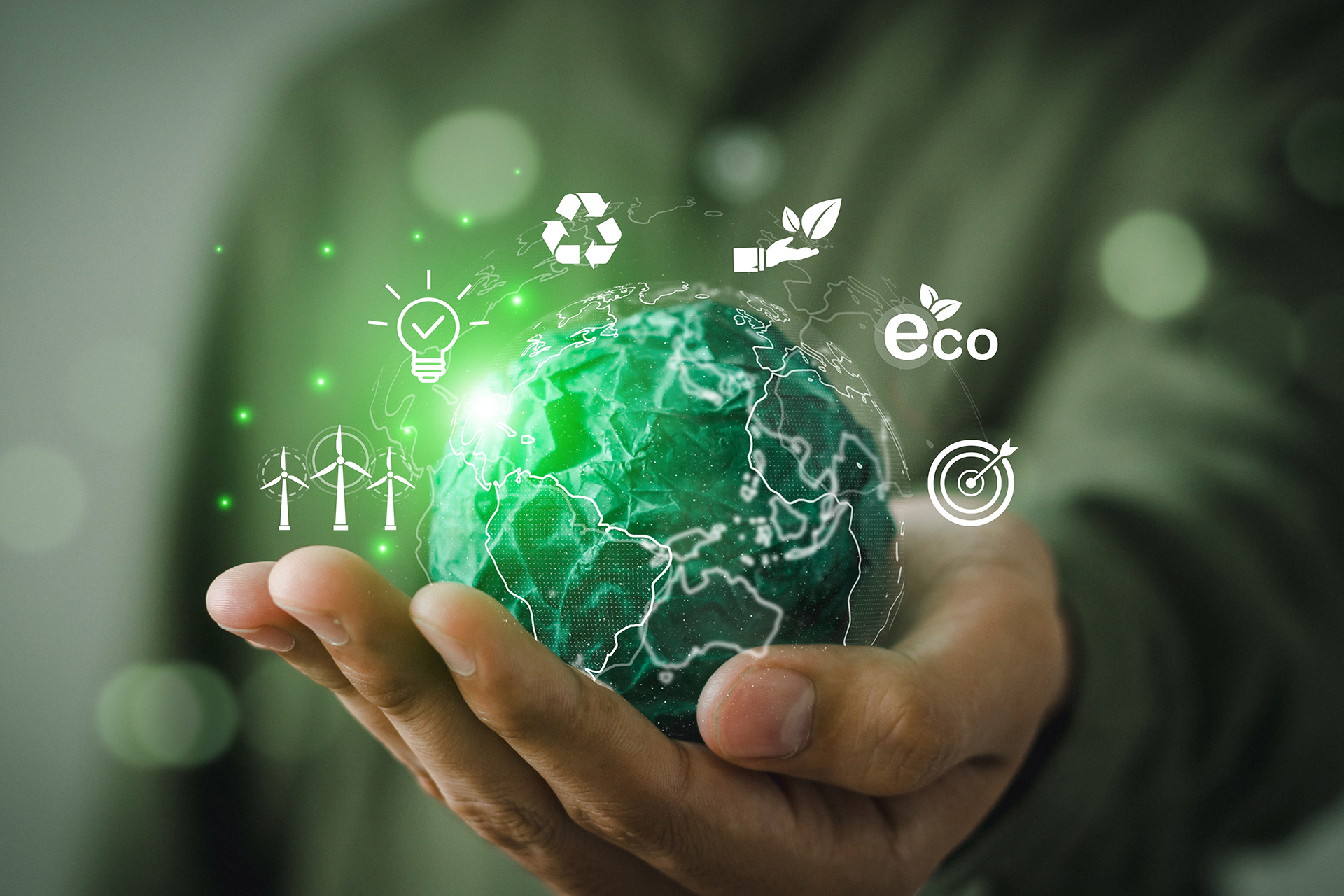
Circular economy as a reference model for industrial recycling
The circular economy marks a significant change in perspective compared to the linear model that has guided production for decades. The key principle is simple: at the end of their life cycle, products do not become waste but return to being raw materials.
In an industrial context, this means designing and managing processes so that every material can be recovered, reused or upgraded. For balls, this involves developing solutions to facilitate extraction from components, using recycled steel, extending service life through maintenance and regenerative treatments, and reducing impact by choosing sustainable suppliers and packaging.
The three fundamental principles of the circular economy
According to the Ellen MacArthur Foundation, one of the leading organisations in the sector, the circular economy is “an economy designed to regenerate itself” and is based on three pillars:
- Designing to eliminate waste and pollution: creating products that can be dismantled, repaired and easily recycled.
- Keeping materials in use for as long as possible: prioritising maintenance, repair and reconditioning over disposal.
- Regenerating natural systems: the goal is not only to ‘do less harm’, but to restore value to ecosystems, use renewable raw materials and offset residual emissions.
Environmental benefits and competitive advantages of industrial product recycling
In addition to reducing waste and CO₂ emissions and contributing to resource conservation, industrial product recycling helps companies stay in line with increasingly stringent regulations, such as the Waste Directive (2008/98/EC), the Circular Economy Action Plan and Extended Producer Responsibility (EPR).
But regulatory compliance is only part of the picture: those who integrate circular practices gain credibility in the market, strengthening their reputation and positioning themselves as preferred partners for sustainability-oriented customers and supply chains.
Strategies for recycling and reusing industrial precision balls
Applying the principles of the circular economy means translating them into concrete processes that can guarantee safety and sustainability throughout the entire life cycle.
Collection, selection and cleaning
The process begins with the organised collection of used balls, often through customer collection programmes or reverse logistics. Once recovered, they are sorted according to material and size, then subjected to cleaning and decontamination processes (degreasing, pickling, passivation, rinsing, drying).
This phase is crucial in determining which components can be remanufactured and which should be sent for remelting.
Remanufacturing and quality control
Balls suitable for recovery are analysed to check their residual wear:
- those with a slight degree of wear are re-lapped, polished or subjected to new heat processes, recovering performance comparable to that of new products.
- Components with greater wear are used in less critical applications.
- Balls that cannot be recovered are sent for metal recycling.
In any case, final quality control ensures the reliability of the reconditioned product.
From automotive to medical: the main fields of application for reuse
Strategies for recycling and reusing industrial products are used in numerous production sectors, including:
Automotive sector
Regenerated balls are used in the automotive sector in non-critical vehicle mechanisms such as seat adjustment, actuators or closures, as well as in prototypes or test vehicles, in the aftermarket, and in cheaper and more environmentally friendly spare parts.
Food sector
Thanks to certified cleaning and rigorous controls, the balls can be reused in packaging and handling machinery, in which frequent replacement of components generates a constant flow of reconditionable materials.
Medical sector
Despite stricter constraints, balls can also be reused in the healthcare sector, for example in non-implantable instruments such as pumps or centrifuges. Even when direct reuse is not possible, the recycling of valuable metals still ensures significant recovery.
RGPBALLS’ contribution to the transition to a circular economy
RGPBALLS’ commitment to the circular economy is an integral part of a broader environmental sustainability strategy that characterises the company’s identity.
Precision ball regeneration practices are complemented by other commitments such as reducing the carbon footprint, choosing eco-friendly materials, digitising production processes and advanced industrial waste management.
As such, the recycling and reuse of precision balls are not isolated initiatives, but fundamental components of a production model capable of reducing dependence on virgin resources and contributing to a low-emission future.
Do you want to integrate circular economy practices into your business?
RGPBALLS precision balls can support your sustainability goals.









20092 Cinisello Balsamo (MI) - Italy
P.I. / C.F. / Reg. Impr. 08678490965
N. REA: MI-2042305
Cap. soc. € 1.000.000 int. vers.

Please note that any particular and specific technical requirements must always be requested in advance during the quotation phase.