Automation and robotics in precision ball production lines

Categories
08/01/2026
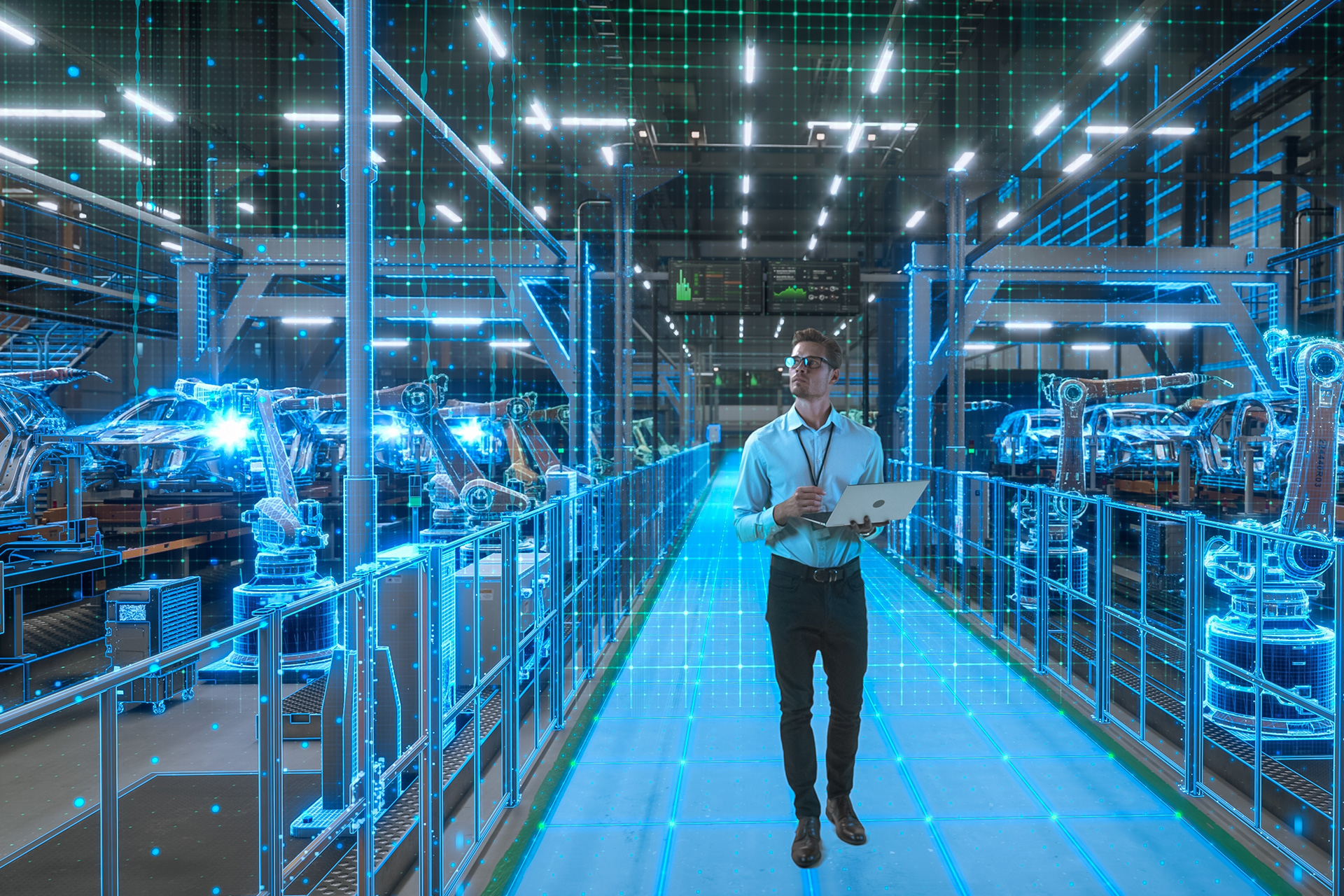
The evolution towards Industry 4.0 has made the automation of ball production a key factor in competitiveness. This sector requires extremely high levels of accuracy, which are difficult to achieve with manual intervention alone: process automation, together with robotics and artificial vision, has transformed what was once a craft sector into an efficient digital industrial ecosystem. Where previously skilled operators manually lapped each ball, nowadays automated and interconnected lines produce millions of pieces with consistent quality and tolerances in the region of microns.
automation-production-precision-balls

Collaborative robots, advanced CNC machines, intelligent sensors and artificial vision systems communicate in real time, ensuring operational continuity, traceability and quality control that minimises errors and defects.

However, the human role does not disappear. On the contrary, it evolves. Operators move from manual execution to supervision and data analysis, contributing to continuous quality improvement.

From the workshop to the smart factory: the evolution of industrial automation

The path of industrial automation has revolutionised ball production:

  • Programmable automation: with the introduction of PLCs and CNC machines in the 1970s, production lines achieved micrometric tolerances and a flexibility that was previously unthinkable.
  • Industry 4.0: today, IoT, big data and Artificial Intelligence have made processes adaptive and predictive, preventing failures and optimising consumption in real time.
  • Digital Twin: virtual replication of production lines allows simulations and tests to be carried out before any real changes are made, reducing experimentation times and costs.


Collaborative and adaptive robotics now play a central role, combining safety, precision and flexibility. For example, cobots can work side by side with operators, detecting accidental contact and adapting to variable tasks; 3D artificial vision systems also enable complex scenarios to be managed, such as picking up balls arranged in a disorderly manner.

Practical applications of automation in ball production

Automation now plays a key role in every stage of the precision ball production cycle, from cutting the metal wire to packaging the finished product. Anthropomorphic robots, automated lapping and polishing machines and optical sensors work in synergy with centralised control software.


Assembling, polishing, quality control

Automation translates into total control of all crucial stages:

  • During the forging and assembling phases, high-precision robots perform repetitive operations with movements calibrated to the micron, reducing waste and differences between batches.
  • During polishing, automated robots apply controlled pressure, achieving perfectly uniform surfaces free of micro-imperfections: a fundamental aspect in ensuring the durability and performance of balls in critical applications.
  • Finally, there is quality control, which is now fully automated. Laser sensors and optical systems analyse diameter, roundness and roughness in real time, comparing each ball with digital reference models. This approach does not only speed up production, but also ensures that each component meets the most stringent specifications, with no margin for human error.

Integration with artificial vision systems for total control

Integration with artificial vision represents one of the most significant developments. High-resolution cameras inspect each ball from multiple angles, while machine vision algorithms detect scratches, irregularities or defects invisible to the human eye. In the event of an anomaly, the system automatically flags or corrects the process without interrupting the production cycle.

This synergy between automation, robotics and intelligent vision has made ball production not only faster, but also more reliable and predictable, reducing the need for manual checks and ensuring consistent quality, piece after piece.

The concrete advantages of automation in ball production

Automation brings measurable benefits in terms of quality, productivity, safety and sustainability:

  • Consistent quality: elimination of variability linked to human intervention, with specifications and uniformity respected in every batch.
  • Increased productivity: reduced cycle times, quick format changes, even on small series or prototypes.
  • Workplace safety: operators employed for supervisory activities rather than repetitive or risky tasks.
  •  Sustainability and savings: intelligent systems optimise energy consumption and reduce material waste.

Automation and digitalisation: a strategic combination

The full efficiency of automation can only be achieved through data integration. IoT sensors, cloud platforms and interconnected management systems are transforming production lines into smart ecosystems, capable of autonomously correcting and optimising every stage of production.

The automation of ball production thus becomes a strategic component of the smart factory, where machines, software and people work together to ensure efficiency, traceability and operational continuity.

To find out how automation integrates seamlessly with intelligent data management, read our in-depth article on the digitalisation of industrial processes.

RGPBALLS puts innovation and control into every detail

At RGPBALLS, ball production automation and digitalisation govern every stage, from raw material to finished product. Advanced robotics, artificial vision and digital control systems do not replace human skills, but enhance them: they minimise the risks of non-compliance and guarantee reliable processes.

The result is a range of certified balls that are safe and comply with the most stringent standards, ensuring consistent quality and a lasting competitive advantage.


Do you want to increase the efficiency and reliability of your production processes?
Discover how automation can become your competitive advantage.


CONTACT US

Related articles
recycling-industrial-products
16/01/2026 Recycling and reuse of precision balls: sustainable practices for industrial products
The recycling of industrial products is a crucial issue today: every year, billions of industrial balls reach the end of their useful life in bearings, valves and precision mechanisms. In the past, these components were disposed of, with two consequences: the production of enormous quantities of metal waste and the loss of value of both the raw materials and the energy invested in producing them. The recovery and remelting of precision balls is now a concrete lever for reducing environmental impact and increasing production efficiency. Steel and metal alloys can be remelted and reused without losing their original properties, closing the production cycle with structured collection, selection and remelting processes.
materials-suitable-for-food-contact
13/01/2026 The importance of suitable materials for food contact in precision balls
When it comes to food safety, attention often focuses on ingredients and production processes. However, there is a less visible but equally crucial aspect: the materials used for food contact in the mechanical components of pumps, valves, dosing and packaging systems. Even a component measuring just a few millimetres can compromise the quality of an entire production line if it does not comply with standards. The choice of certified food-grade materials therefore becomes strategic in protecting consumers and safeguarding the brand's reputation.
certifications-industrial-products
17/12/2025 Industrial product certifications for precision balls: quality assurance and conformity
Compliance is the zero point of advanced manufacturing, especially for those operating in highly regulated sectors, and turns industrial product certifications into strategic tools that ensure quality and competitiveness of individual components. In fact, an accuracy of just a few millimetres in a precision ball can determine the difference between a compliant machine and an entire blocked production line. The regulatory framework governing industrial products is increasingly complex. Regulations and directives are no longer just about mechanical performance, but encompass chemical safety, environmental impact and responsibility along the entire supply chain.
Reduce,Co2,Emission,Concept.,Renewable,Energy-based,Green,Businesses,Can,Limit
15/12/2025 Reducing the carbon footprint in precision ball production
Measuring and reducing the carbon footprint now guides the most advanced industrial development strategies. In the case of precision balls, this approach translates into the rigorous analysis of every step: from the origin of the materials to energy management, all the way to transport and the end of the product's life. Nowadays, companies are driven by two converging forces: on one hand, increasingly stringent regulations and, on the other hand, market demand for high-performance components but manufactured with environmental responsibility. In this scenario, sustainability becomes a driver for innovation that brings with it more efficient processes, greener technologies and new opportunities.
balls-of-precision-and-sustainability-industry
10/12/2025 Precision balls and sustainability in the industry: how to reduce environmental impact
Sustainability is the new imperative redefining competitiveness in the global industry landscape. For a niche sector such as precision balls, this principle acts as an operational necessity that shapes the entire product lifecycle: from the ethical selection of materials to the energy efficiency of processes, from machining to logistics and on to end-of-life recovery. Integrating sustainability into this production strategy transforms environmental constraints into concrete opportunities: resources are optimised, emissions are reduced and waste is reduced.
ecological-materials-for-industrial-balls
01/12/2025 Ecological materials for industrial balls: a step towards sustainability
How important is the choice of environmentally friendly materials nowadays in the transition to sustainable industrial production? In critical industrial sectors such as precision balls, the adoption of low-impact alternatives is an operational strategy that reduces the environmental footprint, enhances the circular economy and optimises production processes. Infact, the effect of this choice is exponential. These small components are produced in billions of units each year, having critical uses in bearings, valves and control systems. On a global scale, every gram saved and every improvement in recyclability translates into a concrete reduction in overall consumption and emissions.
customised-precision-balls
27/11/2025 RGPBALLS custom machining: how a ball is made to customer specifications
The modern precision ball industry is no longer satisfied with standard solutions. Every sector, from automotive to medical, from aerospace to mechanical engineering, imposes unique challenges and requires components precisely tailored not just to the micron, but to specific requirements. This is where custom machining makes the difference. Where standard balls find their limits, it is necessary to transform the customer's technical request into a customised ball, developed according to accurate operations or application specifications. More than a supplier, RGPBALLS is a strategic partner. We offer an integrated service that covers the entire route: from initial technical advice to production, from strict in-house quality control to final delivery. This is our way of ensuring that each customised component is a determining factor in the success of the implementation.
precision-ball-production
25/11/2025 How an RGPBALLS precision ball is made: from raw material to final quality control
There is a complex production process behind a precision ball, requiring advanced technology, specialist skills and meticulous care at every stage. From raw material selection to machining, from heat processing to final inspection, each step is designed to ensure consistent performance and long-term reliability.
precision spheres-furniture-industry-rgpballs
17/09/2025 Precision balls for the furniture industry: characteristics and applications
In the furniture industry, precision is essential to ensure high quality products and flawless performance. Each component must be manufactured with meticulous attention to detail to ensure durability and optimal functionality. In this context, precision industrial balls offer significant advantages and innovative solutions. Used in a wide range of applications in the furniture industry, these small components require careful selection of materials, dimensions and tolerances.
balls-industrial-sector-marine
08/07/2025 RGPBALLS produces precision balls for shipbuilding
Shipping and shipbuilding are areas where precision is of vital importance. That is why, at the very core of the latest technological innovations within this field, we can find small but very impressive components: precision balls.
automotive-industrial-balls
27/06/2025 How precision balls are used in the automotive market
Exploring the automotive sector with a focus on components that are leading innovation, we come across precision balls, the true jewels of industrial mechanics. Like in many other application markets, these elements, though small in size, have a substantial impact on performance, safety and efficiency.
sfere-industriali-settore-agricolo
12/06/2025 RGPBALLS precision balls for agricultural applications
At a time when technological innovation is transforming agriculture, precision balls are emerging as key components in the modernisation of agricultural machinery and systems.