What role does Artificial Intelligence (AI) play in the industrial production of precision balls?

The benefits of AI in industrial production
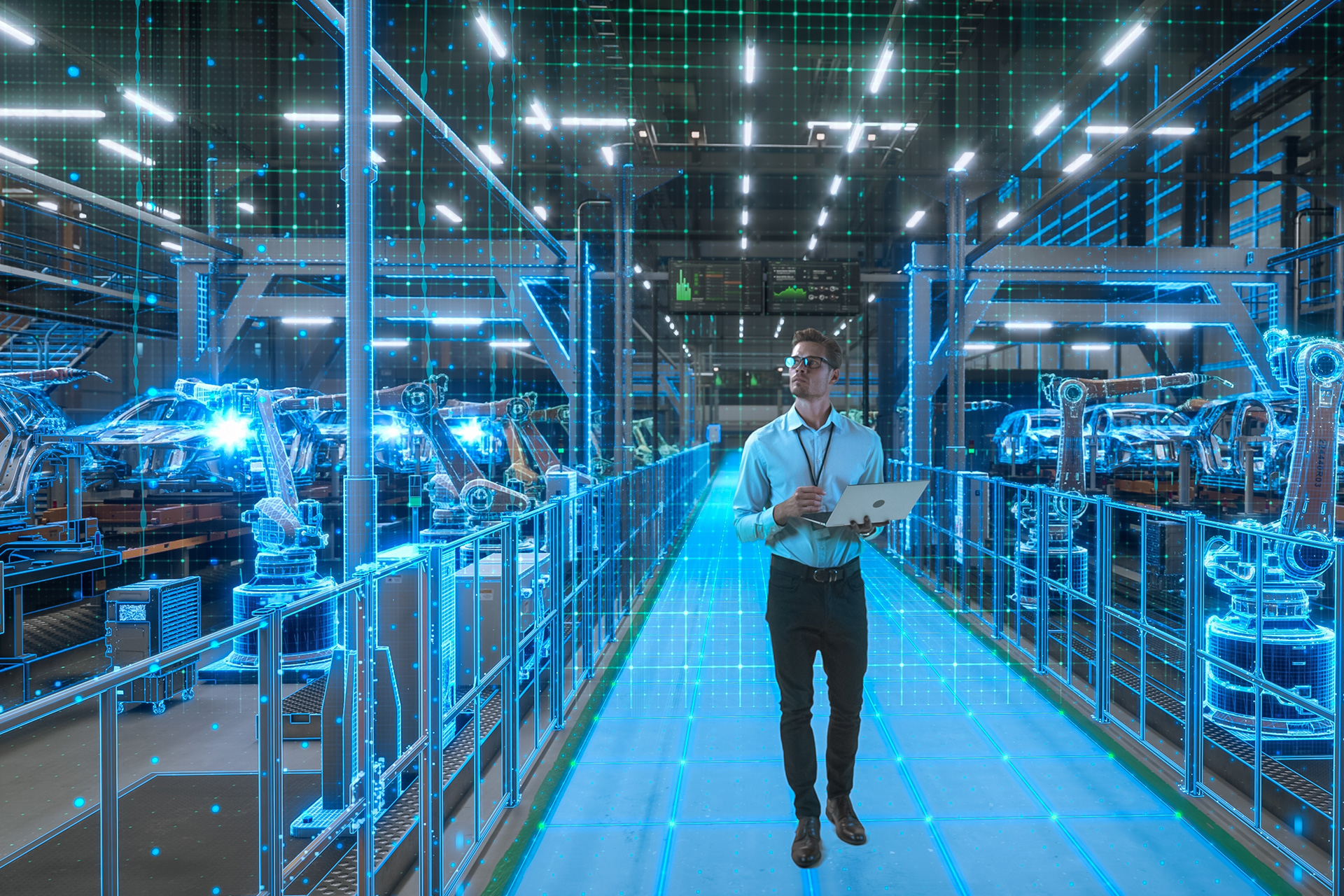
AI excels at automating repetitive processes and analysing data, improving efficiency, quality and productivity. In precision ball production, it can monitor machine tools in real time, adjusting parameters such as speed and pressure to ensure consistency, predict failures or anomalies, reduce waste and downtime, and inspect and detect surface defects with an accuracy that often exceeds the human eye.
Extreme precision and repeatability in production processes
AI algorithms correct any dimensional deviations in real time, ensuring uniformity and consistent quality. This ensures that every ball produced meets the highest standards without variation.
Automated quality control for defect-free production
Machine vision systems analyse thousands of balls per minute, detecting microscopic defects and rejecting non-conforming parts with a level of accuracy that is absolutely superior to that of humans.
Predictive maintenance for continuous production
AI constantly monitors the condition of machinery, predicting faults and wear before they occur. This optimises maintenance operations, reduces downtime and ensures uninterrupted production.
Energy efficiency and reduced operating costs
Through continuous data analysis, AI optimises industrial processes by minimising material and energy wastage. This does not only reduce operating costs but also improves the sustainability of production.
The limits of AI and the crucial role of humans
However, AI is not infallible. Its effectiveness depends on the quality of the data with which it is ‘trained’ and it cannot improvise in the face of unforeseen situations. The production of precision balls often requires complex quality assessments, such as the interpretation of microstructures or the handling of non-standard materials, which only an experienced technician can deal with. Moreover, the high standards involved in critical industries do not tolerate approximations: human intervention remains crucial to calibrate processes, validate results and ensure that each ball meets specific requirements. AI is an accelerator, but humans are the guarantors of perfection.
Despite its advantages, AI therefore has certain limitations that make human intervention indispensable:
Reduced flexibility in complex situations
AI excels in standardised processes, but struggles to adapt to variations in production, special materials or complex customisation.
Need for human supervision
Even the most advanced systems require experienced engineers to calibrate processes, interpret data and handle unexpected anomalies.
High initial investment
Implementing AI involves significant costs in terms of infrastructure, software and staff training. It is therefore crucial for companies to carefully evaluate the cost-benefit ratio.
RGPBALLS: the perfect balance between automation and human expertise
In conclusion, Artificial Intelligence is an accelerator of innovation in the industry, but it cannot replace human expertise. At RGPBALLS we know this, which is why we combine both:
- Advanced automation for data monitoring and analysis
- Expert human control to validate each production step
- Continuous research and development to maintain standards of excellence
Relying on RGPBALLS means choosing a partner that combines technology and human expertise, guaranteeing certified quality without compromise. Each production batch is subjected to rigorous controls, in which automation improves efficiency and precision, but it is experience that transforms progress into perfection.
Optimise precision ball production with Artificial Intelligence









20092 Cinisello Balsamo (MI) - Italy
P.I. / C.F. / Reg. Impr. 08678490965
N. REA: MI-2042305
Cap. soc. € 1.000.000 int. vers.

Please note that any particular and specific technical requirements must always be requested in advance during the quotation phase.